Why Chicago’s Young Families Are Trading Perfection for Patina in Fulton Market, Lincoln Park, and Beyond
Guest Post by Ali Rouzati of Rouzati Rugs

For a long time, the standard of luxury in Chicago interiors—specifically in the high-rises of River North and the historic row homes of Lincoln Park—was defined by a pristine, almost museum-like perfection. Clean lines, cool grays, and textiles that looked like they shouldn’t be touched, let alone walked on.
But there has been a distinct shift in the wind.
At Rouzati Rugs,, we are seeing a massive wave of young couples and growing families moving into these neighborhoods who are rejecting the “showroom” look. They don’t want a home that feels like a gallery where you have to whisper; they want a home that feels lived-in, curated, and soulful.
The anchor of this new aesthetic? The Vintage Distressed Rug.
From the timber lofts of Fulton Market to the renovated Greystones of Lincoln Park and Logan Square, the demand for hand-knotted rugs that carry a sense of history—and the durability to survive a toddler—is at an all-time high. Here is why the “perfectly imperfect” look is taking over Chicago’s most design-forward zip codes.
The Aesthetic Shift: Warming Up the Industrial

Chicago’s architecture is diverse, but the interiors of our trendiest neighborhoods share a common challenge: “The Cold Factor.”
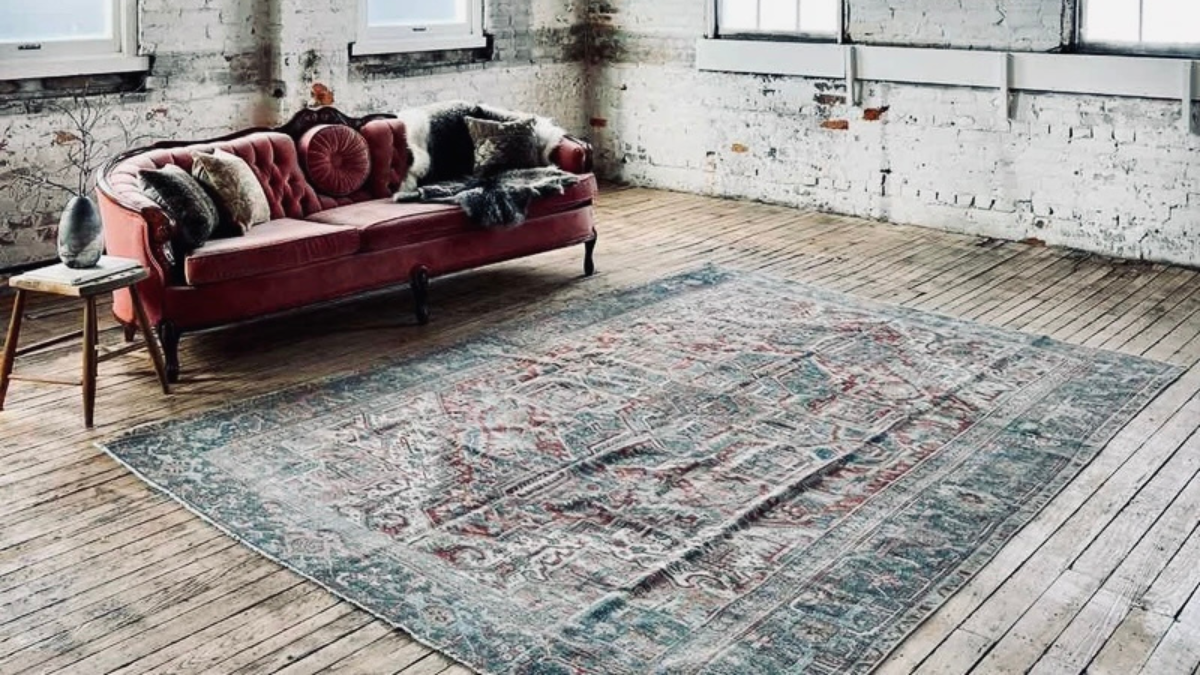
In Fulton Market and River North, young homeowners are often working with expansive open-concept spaces characterized by floor-to-ceiling glass, exposed brick, and polished concrete. While visually stunning, these elements can feel cold and echoing.
Ten years ago, the instinct was to match this with sleek, modern, solid-colored rugs. Today, designers and homeowners are realizing that a sleek rug on a sleek floor just makes the room feel sterile.
This is where Vintage Rugs and Distressed Rugs become the hero of the room.
“A home shouldn’t feel like a gallery you tiptoe through. It should feel lived‑in, welcoming, and genuine. That’s why trendy vintage rugs and distressed rugs have recently become the new anchor of Chicago design in the downtown area.” – Rouzati Rugs
By layering a rug with abrash (natural color variation) and a worn-down pile into a modern industrial space, you create instant tension. The softness of the worn wool contrasts with the hardness of the concrete. The history of a 50-year-old weave grounds the newness of a 2025 construction. It adds a “soul” to the apartment that new furniture simply cannot provide.
The “Kid Factor”: Why Distressed is the Ultimate Performance Fabric
There is a misconception among new parents that “nice things” have to wait until the kids are off to college. In Lincoln Park and Logan Square, where we see many young families renovating historic bungalows and single-family homes, we constantly have to debunk the myth that “Synthetic is safer.”
In reality, a hand-knotted vintage rug is the most family-friendly flooring option on the planet.
Here is the science behind it:
- Lanolin is Nature’s Scotchgard: High-quality wool from the Turkish or Persian highlands is rich in natural lanolin. This waxy coating prevents liquids from soaking instantly into the fiber. If a juice box spills on a polypropylene rug, it bonds with the plastic. On wool, it sits on top, giving you time to blot it up.
- The Pattern Hides the Mess: The beauty of a distressed, intricate pattern is that it is visually forgiving. A crumb, a dog hair, or a small spot gets lost in the complexity of the weave. On a solid gray rug, every speck is visible. On a vintage Heriz or Oushak, life blends in.
- It’s Already Broken In: A vintage distressed rug has already lived a life. It has been walked on for decades. It doesn’t shed like a new tufted rug, and it doesn’t look “ruined” if it gets a little traffic wear—it just looks more authentic.
For families in Lincoln Park balancing aesthetics with playdates, this is the ultimate “have your cake and eat it too” solution. You get a piece of art on the floor that you don’t have to be afraid of.
Neighborhood Guide: What We Are Seeing Where
Since we work intimately with clients across the city, we’ve noticed specific micro-trends in rug preferences based on the neighborhood architecture.
1. Fulton Market & West Loop: The “Faded Geometric” The lofts here are heavy on brick and timber. Clients are leaning toward shaved-pile Vintage Rugs where the pattern is barely visible—almost like a ghost of the original design. We see a high demand for “Mushroom,” “Taupe,” and “Faded Rust” tones here. These colors bridge the gap between the red brick walls and the modern neutral furniture.
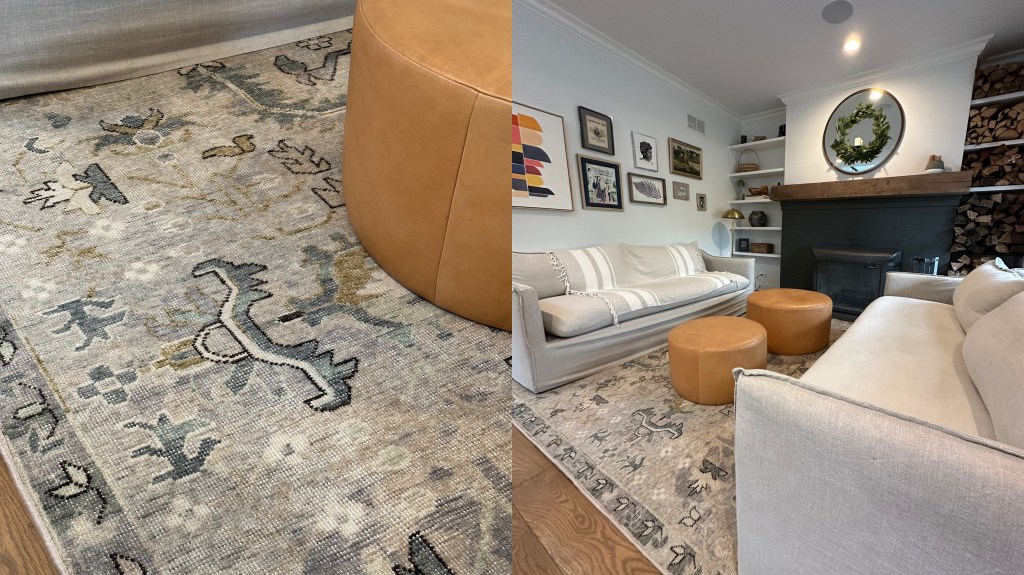
2. Lincoln Park & Gold Coast: The “Softened Traditional” In these historic neighborhoods, the architecture is often ornate—crown molding, high ceilings, and original fireplaces. The trend here is to use Vintage Oushak Rugs to take the “stiffness” out of the room. Instead of a formal, dark red Persian rug (which can feel like a law office), young families are choosing faded pinks, soft apricots, and muted sage greens. It respects the history of the home but makes it feel airy and modern.

3. River North & Streeterville: The “Abstract Traditional” In the high-rises, light is everything. With UV exposure from lake-facing windows, clients need natural dyes that fade elegantly rather than chemically dyed synthetics that bleach out. We are seeing a move toward Overdyed Rugs in Chicago or heavily distressed antique rugs that read almost like abstract paintings. They provide a soft, organic shape to break up the harsh right angles of a modern condo.

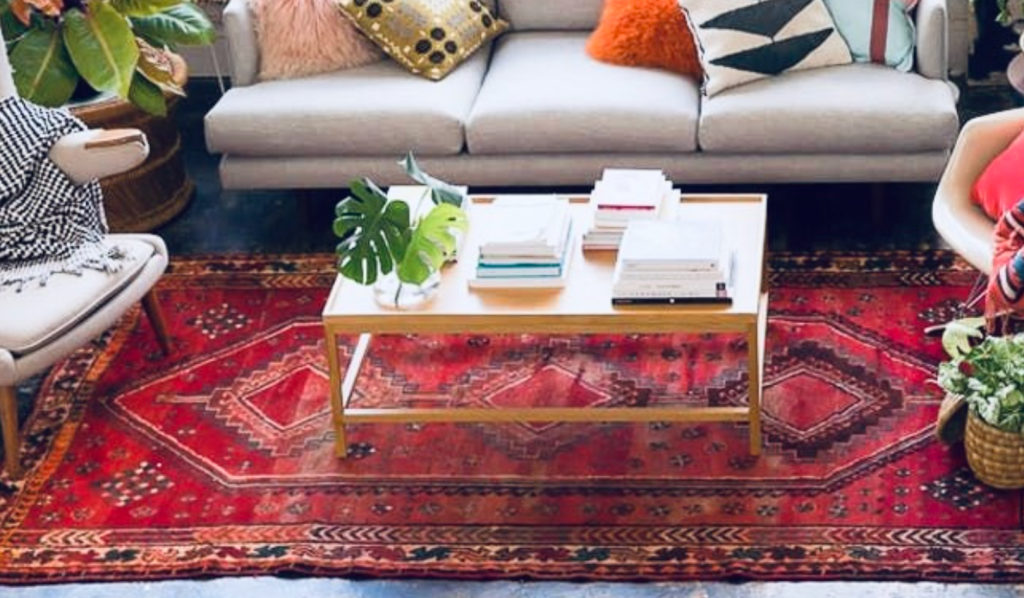
4. Logan Square & Wicker Park: The “Bohemian Anchor” In these neighborhoods, where vintage furniture and mid-century modern pieces are common, the rugs need to be bolder. We are seeing a resurgence of Boho Rugs in Chicago with tribal patterns and warmer, deeper palettes—navy blues, deep reds, and saffron yellows—but always with that crucial “distressed” finish. These rugs act as the anchor for eclectic, collected rooms.
The “Green” Choice for a Conscious Generation
Another driving force we see, particularly with younger couples, is the desire for sustainability.
Buying a vintage rug is the ultimate act of sustainable decorating. No new resources were used to create it. No factories were spun up. It is a form of recycling that happens to be incredibly chic.
In a world of “fast furniture” that ends up in a landfill after three years, investing in a hand-knotted piece that has already survived 50 years—and will survive 50 more—resonates with the values of the modern Chicago homeowner. It is an investment in longevity rather than disposability.
How to Shop for “The One”
At Rouzati Rugs, we know that finding the perfect vintage piece can be intimidating. No two are alike. Dimensions are often irregular (a “9×12” might actually be “8’10 x 11’4”).
Our advice to our clients in the city is simple: Don’t guess. Try it!
Because these rugs react so dramatically to lighting conditions—looking completely different in a north-facing Lincoln Park living room than they do in a south-facing River North penthouse—we encourage our Home Trial Service.We encourage you to embrace the imperfection. Look for the abrash (color variation). Look for the wear patterns that tell a story. In a digital world where everything is pixel-perfect, there is something profoundly grounding about bringing a handmade, imperfect, history-rich object into your home.
In Conclusion:
Whether you are softening a concrete loft in Fulton Market or adding character to a Greystone in Lincoln Park, the trend is clear: Texture is the new color.
The shift toward vintage and distressed rugs isn’t just a style choice; it’s a lifestyle choice. It’s a declaration that a home is meant to be lived in, enjoyed, and built to last.
About the Author: Rouzati Rugs is a family-owned purveyor of fine hand-knotted rugs, located in Evanston. With over 40 years of experience serving the Chicago design community and North Shore homeowners, we specialize in curating a vast collection of vintage, antique, and transitional pieces. Visit our showroom at 2200 Green Bay Rd. in Evanston, IL or explore our collection online at rouzatirugs.com.